How to Say Hello in Brazilian Portuguese: 12 Greetings

By Bruno Lopes · Brazilian Portuguese teacher
Host of I Speak Portuguese · Updated
Meet Bruno and the teaching teamThe 12 greetings
| Greeting | Meaning | When to use |
|---|---|---|
| Oi | Hi | A common everyday greeting. |
| Olá | Hello | A neutral hello in speech or writing. |
| Oi, tudo bem? | Hi, all good? | Standard friendly greeting — expect the same back. |
| Bom dia | Good morning | Use in the morning. |
| Boa tarde | Good afternoon | Noon until sunset. |
| Boa noite | Good evening / good night | After sunset, both for arriving and leaving. |
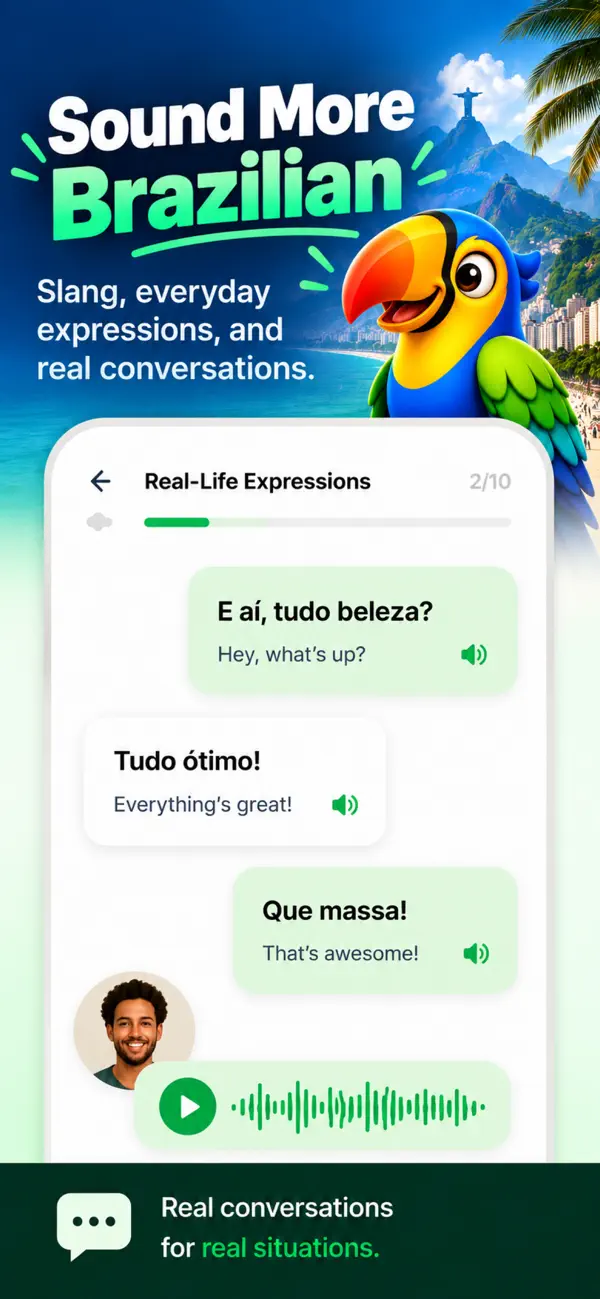
| E aí? | What's up? | Casual, with friends. Very common in Brazil. |
| Beleza? | Cool? / All good? | Casual. "Tudo beleza" is a common reply. |
| Fala! | Speak! / Yo! | Slangy greeting between friends, especially guys. |
| Salve! | Hey! | Informal; use when it fits the people around you. |
| Como vai? | How are you? | Slightly more formal or affectionate. |
| Prazer em conhecer | Nice to meet you | When meeting someone for the first time; greeting customs vary. |
Standard call-and-response
Most Brazilian greetings work like ping-pong:
- A: Oi, tudo bem? — Hi, all good?
- B: Tudo, e você? — All good, and you?
- A: Tudo bem também. — Also good.
This exchange gives you a useful starting point. Add a question or introduce yourself when you want to continue the conversation.
Choose a greeting that fits
Start with oi, olá, or a time-of-day greeting when you are unsure. Expressions such as e aí? and salve! are more informal. Usage varies between regions, social groups, and individual speakers.
At night, boa noite can mean good evening when you arrive and good night when you leave. Avoid translating English “good night” as a greeting for every time of day.
When someone asks tudo bem?, you can return the question: Tudo bem, e você? Keep the conversation going rather than treating it as a vocabulary test.
Practice this today
Pick three greetings from the list — one formal, one standard, one slangy. Say each out loud. The next time you meet a Brazilian, use the one that matches the vibe.
Listen, then try it yourself
These phrase recordings are by Bruno. Play one, listen again, and repeat it aloud. The dialogue below is an original written practice example; the recordings cover the individual phrases shown here.
Practice a short conversation
- You: Oi, bom dia!
- Hi, good morning!
- Your neighbor: Bom dia! Tudo bem?
- Good morning! How are you?
- You: Tudo bem, e você?
- I'm well, and you?
Your turn
Say your answers aloud before opening the suggestions. Other answers can work too.
- Greet a neighbor in the morning.
- Reply to Tudo bem? and ask the question back.
- Greet someone when you arrive in the evening.
Show suggested answers
- Oi, bom dia! — Hi, good morning!
- Tudo bem, e você? — I'm well, and you?
- Boa noite! — Good evening!
Keep practicing everyday phrases and Brazilian audio in the Real Life Portuguese app. For feedback on your own conversations, explore lessons with our Brazilian teaching team.
Frequently asked questions
Do Brazilians actually say 'olá'?
Yes. Olá is a valid greeting in both speech and writing. Oi is also very common in everyday conversation; the choice depends on the speaker and situation.
What's the difference between 'tudo bem' and 'tudo bom'?
Almost none. Both mean 'everything good?' and both work as a greeting and a reply. 'Tudo bem?' is slightly more common as a question; 'tudo bom' is a very common answer. You can literally reply 'tudo bem' to 'tudo bem?' — Brazilians do it constantly.
How do I greet someone in a business context?
'Bom dia', 'boa tarde', or 'boa noite' depending on the time, followed by 'tudo bem?'. Add 'senhor' or 'senhora' if the person is significantly older or in a senior role.